Top


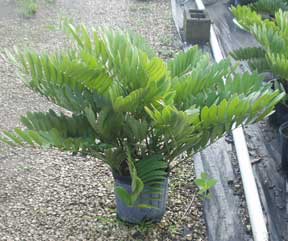
Cardboard Palm - Zamia furfurcea

Zamia furfurcea or is believed by many as a member of a group of plants that survived the Earth since the time of the dinosaurs.  Although it is commonly called as Cardboard Palm, this unusual palm tree exhibits a growth habit similar to a palm.  It is also known as Cardboard Cycad, the Cardboard Plant, Cardboard sago, Jamaican Sago, and Mexican Cycad

The term zami is Latin for “pine nut” mainly because of the nutty bright-red seeds inside the rusty-brown egg-shaped cones produced by this plant.  This tightly packed seeds are believed to be very poisonous and have claimed some lives of both animals and humans.  The term furfurcea on the other hand means “mealy” or “scurfy” which is based on the plant’s fleshy subterranean trunk that is scarfed or marked with scars from old leaf bases. 

Most of its trivial or common names carry the term “cardboard” which is derived from its wide oval green leaflets which feel like cardboard when rubbed.  These leaflets are occasionally toothed in the tips and are seen along with the plant’s thick leathery leaves that form a loose symmetrical rosette or circular crowns that resemble palm fronds.

The spreading look of the leaves of Zamia furfurcea makes it a favorite landscape plant.  It can be used as an accent and specimen plant or it can be in mixed foundation plantings for a lush tropical effect in gardens, patio, and deck.  Its mounding growth habit makes it a great plant for a container landscape idea indoors and a shrub border outdoors.  Just watch out for its seeds not to be eaten by children and by pets! Since Zamia furfurcea is salt-resistant, many planters use it in beachside plantings.   Its exotic look and instinct for survival makes it one of the few tough houseplants that can survive neglect and harsh conditions.


Related Articles

  • Sago Plant House Plant - The sago palm is found primarily in the landscape across the southern states… but the sago palm which is not a palm but a cycad is also used indoors. Here’s a few sago’s planted in clay pots and topdressed with rock.
  • Neanthe Bella or Parlor Palm - Neanthe Bella, also known as the parlor palm or the Chamaedorea elegans, is a graceful and beautiful palm. This plant is considered to be one of the most popular among all palms. Originating from Central America, Neanthe Bella Palm is a slow growing palm with small divided fronds.  It has soft and dropping leaflets. Despite of its unique

Comments

2 Responses to “Cardboard Palm - Zamia furfurcea”

  1. Betty Furlan on November 30th, 2008 11:25 pm

    Gary,

    I have had a Cardboard Palm for about a year. It has done beautifully until about a month ago when I noticed its leaves were all turning yellow or brown. I never watered this plant very much but the soil was bone dry so I gave it a good shower. I haven’t seen any improvement. The plant has always been kept inside back about 2 feet from a window with a southern exposure. I live in Northeast Ohio so our heat clicked on about the same time the plant started its decline. It is not near a vent though. What can I do to save this plant? It has been so easy to maintain up until now? Thanks!

  2. admin on December 4th, 2008 11:11 pm

    If the plant is bone dry I’d try watering it from below. Set the pot in a pan of water and let it wick up the water it needs. DO NOT let the plant site in water for days on end. Let the water get soaked up into the root ball and all any excess to drain off.

    Before I started moving to LECA rock indoors I use to drop my pots in a 5 gallon bucket and let the soak up all the water they could and then allow then to drain off.

Feel free to leave a comment...


Bottom