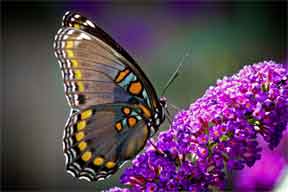
The Buddleia davidii, which many know by its common names of summer lilac and butterfly bush, is a great favorite of mine, and popular in the North. Its bloom resembles dainty sprays of lilac, with a fragrance so penetrating it attracts myriads of butterflies.
But virtues of Buddleia davidii do not end here. Though it dies back to the ground every winter, it comes up in larger clumps year after year. It is hardy and survives our extremely cold Iowa winters without mulch although I do plant them in spots protected from north winds and the cold. One factor making Buddleia undesirable in areas like California is their rampant growth. Many states list Buddleia as an invasive species.
Butterfly Bush Not Soil Fussy
Butterfly bush of which there are many varieties, is not fussy about soil but responds to a good soaking in very dry weather. It is a coarse, leggy shrub which can reach heights of 5-15 feet and with a spread from 4-12 feet. I like to plant low-growing chrysanthemums or phlox around its feet. The blooming period of Buddleia davidii lasts throughout the summer months and its flowers come in a long range of lavenders to dark purple as well as white through pinks down to deep reds.
Partial List Of Buddleia Varieties

- Bicolor
- Black Knight
- Dwarf Blue
- Fountain
- Golden
- Harelquin
- Hever Castle
- Himalayan
- Lilac
- Pink Delight
- Purple Ice Delight
- Royal Red
- Twilight
- White Profusion
- Winter Flowering
Versatility in arrangements is what rates the butterfly bush tops with me, though I seldom see others use its sprays for that purpose. Its delicate blossoms combine well with heavier flowers. An arrangement of deep purple Buddleia and white glads or white Buddleia with pink or red roses makes a picture not soon to be forgotten.
Spring Trimming of The Buddleia Butterfly Bush
Question: Should a buddleia be trimmed in the spring? Mine is about four years old and has never been trimmed. It blooms well, but the flowers are not as large as I expected. Would trimming make them larger? CC, Illinois.
Answer: Pruning your Buddleia should improve its blooming… so do not wait another 4 years. It is best to think of the butterfly bush as a herbaceous perennial and treat it as such instead of as a shrub.
For best results and secure the best bloom from a buddleia, prune it to within about six inches of the ground each spring just at the time new growth begins to show at the base of the shrub. When the Crocus come out is a good indicator. This new growth is usually evident in late March. New wood produced after this severe pruning is more vigorous and the flowers heavier than the ones produced on two-year-old wood of the Buddleia.
Buddleia Alternifolia – The Fountain Butterfly Bush

Differing from other members of the genus because of its alternate leaves, Buddleia alternifolia, the fountain butterfly bush, has the added distinctions of blooming on its old wood and of being the first to bloom and the hardiest of the species.
The lilac-purple flowers, borne in June, are delightfully fragrant, and their abundance on pendulous arching sprays, create an airy, graceful appearance.
Like all butterfly bushes, alternifolia prefers a light, well-drained soil in a sunny situation. It will flower in partial shade, though less profusely.
In pruning remember Buddleia alternifolia cannot be cut back as severely as the other members of the genus. Thinning, cutting off weak and dead wood, and removing oldest branches to the ground occasionally should be practiced just after blooming.
Give this advent from China sufficient room in which to expand, 10-15′, and its colorful floral display will be one of the highlight’s of your early Summer garden.


{ 0 comments… add one now }
You must log in to post a comment.